
Recipes / Bread
Mosbolletjies (aniseed buns in a potjie)
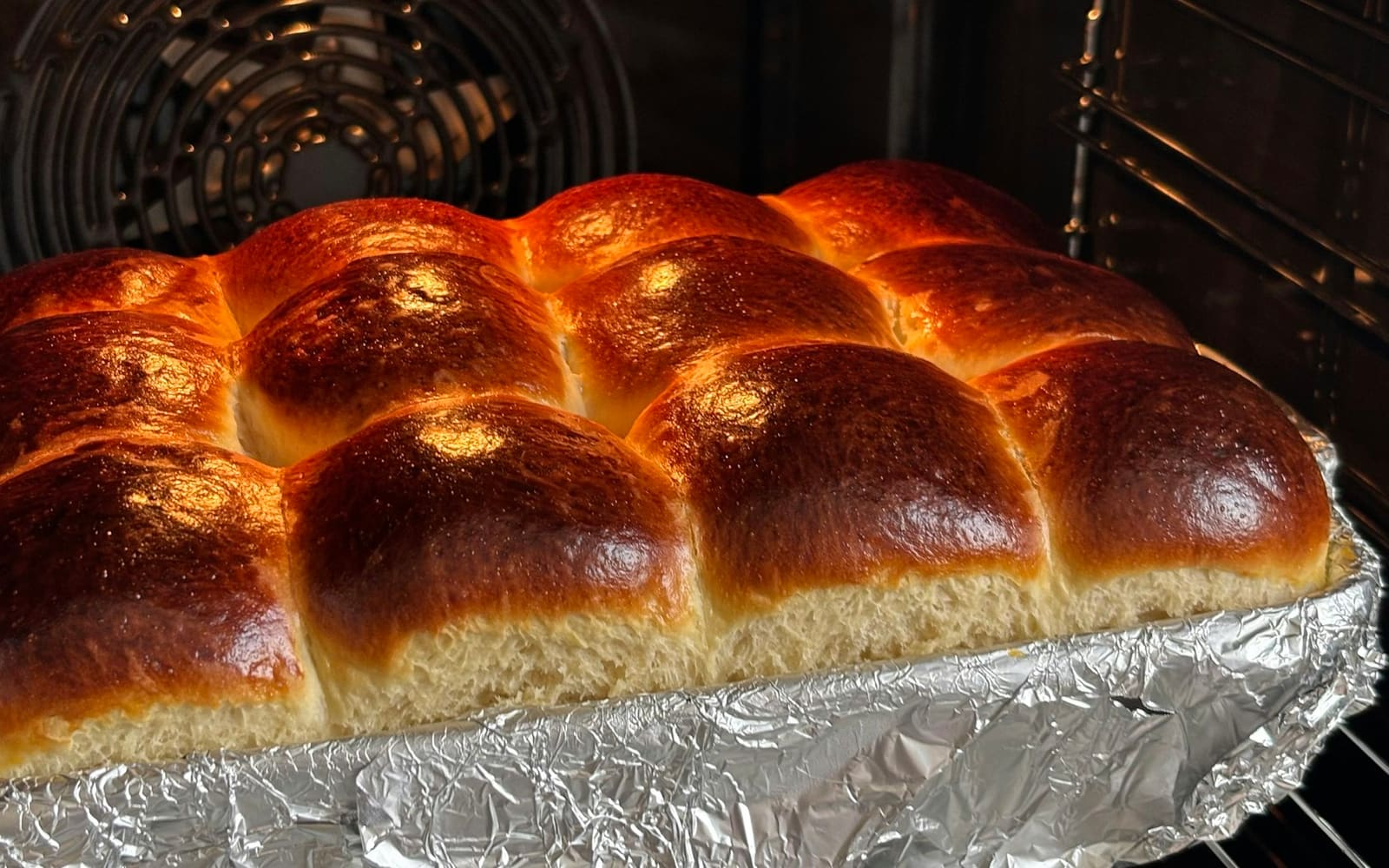
A heritage recipe from 1908: soft, sweet aniseed and nutmeg buns, scaled down from Hilda Duckitt's huge batch and baked in a flat potjie or kettle braai.
- Prep
- 40 min
- On the fire
- 35 min
- Plan ahead
- about 3 hours rising
- Serves
- makes 16 buns
- Done at
- 195°F (90°C)
Works with ReciMe, Paprika and most recipe apps: tap Save to recipe app and pick your app, or paste this page's link into it.
Ingredients
Dough
Glaze
Method
Cooking on gas?
- Set up for indirect heat: light the outside burners (or one side of a two-burner grill) and leave the burner under the food off.
- Close the lid and adjust the lit burners until the lid thermometer reads the temperature in the recipe. Put a drip tray under meat.
- Gas holds a steady heat, so you can skip any step that adds fresh coals. Go by a thermometer in the food rather than the clock.
- Mix the flour, yeast, sugar, aniseed, cinnamon, nutmeg and salt in a large bowl.
- Add the warm grape juice, milk, melted butter and eggs. Mix to a soft dough that comes away from the bowl.
- Knead on a floured surface for 10 to 15 minutes until smooth and stretchy. Cover and leave in a warm place for 2 hours until doubled.
- Knock the dough down, divide it into 16 pieces and roll each into a ball. Pack them side by side in a greased flat-bottomed potjie or a deep baking tin.
- Cover and let the buns rise for 45 minutes to 1 hour until they touch each other and look puffy.
- Beat the yolk, milk and sugar together and brush it over the tops.
- Set the potjie on a few medium coals and put the lid on with about twice as many coals on top. In a kettle braai, bake indirect at about 180°C (350°F) for 30 to 35 minutes.
- Check after 20 minutes and move coals off the bottom if the base smells too toasty.
Done when: the buns are deep golden on top, they sound hollow when you tap the bottom, and the centre bun reads about 90°C (195°F) inside.
Tips
- The 1908 recipe uses raisins fermented in water for a day instead of yeast. To try it, soak 150 g (1 cup) chopped raisins in 500 ml (2 cups) warm water for 24 hours, strain, and use the liquid in place of the grape juice and half the yeast.
- For mosbolletjie rusks, pull the cooled buns apart, cut each in two and dry them overnight in an oven at 80°C (175°F).
- Grape must gives the original flavour. Red or white grape juice is the easiest substitute outside South Africa.
Pair this meal with these drinks
- Hanepoot or Muscadel: Sweet Cape wines with the same grape as the must in the dough.
- Rooibos tea: The traditional drink with a mosbolletjie.
- Coffee (non-alcoholic): Mosbolletjies were made for dunking in coffee.
Mosbolletjies take their name from “mos”, the fermenting grape must that Cape wine farmers used to raise bread at harvest time. Hildagonda Duckitt calls her version an old Dutch recipe and raises it with raisins fermented in a jar for a day. Her batch used 16 pounds of flour, so we scaled it down and used yeast. Bake them the same way as potbrood.
Source
Adapted from Hilda's "Where is it?" of Recipes by Hildagonda J. Duckitt (1908), public domain.